
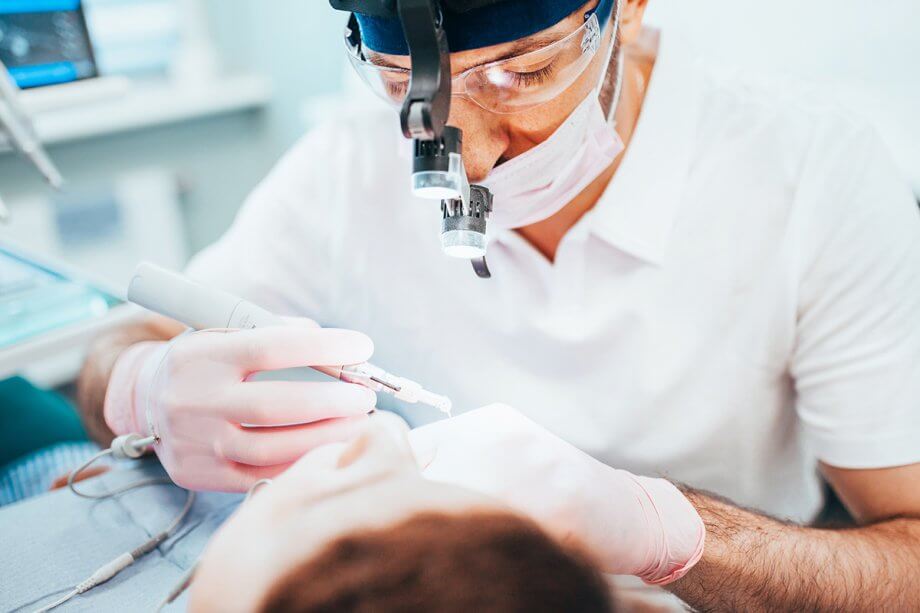
When a tooth is badly damaged, infected, or causing significant pain, patients often wonder whether they need a root canal or whether the tooth should simply be removed. Both treatments can address serious dental problems, but they serve very different purposes. A root canal is designed to save your natural tooth, while an extraction removes a tooth that can no longer be predictably restored.
At Scarsdale Dental Group, we believe treatment decisions should begin with a careful diagnosis. Tooth pain alone does not tell us whether a root canal or extraction is necessary. We evaluate the condition of the tooth, the surrounding bone and gums, the extent of decay or damage, and the long-term outlook for keeping the tooth. Whenever possible, preserving a healthy, functional natural tooth is generally our goal.
When Does a Tooth Need a Root Canal?
A root canal may be recommended when the pulp inside a tooth becomes inflamed, damaged, or infected. The pulp contains nerves and blood vessels and is located inside the center of the tooth. Deep decay, cracks, fractures, trauma, and infection can allow bacteria to reach this inner tissue.
Signs that a tooth may need root canal treatment can include persistent tooth pain, sensitivity to hot or cold temperatures, discomfort while chewing, throbbing pain, swelling, or a tooth that has become darker than the surrounding teeth. Pain may also radiate toward the jaw, ear, head, or neck.
However, symptoms alone are not enough to make a diagnosis. We may use digital X-rays, a clinical examination, bite testing, temperature testing, pulp vitality testing, or advanced 3D imaging to better understand what is happening inside and around the tooth.
If the tooth is structurally strong enough to save, root canal treatment allows us to remove the infected or inflamed pulp while preserving the outer portion and root of the natural tooth. We clean and disinfect the internal canals, fill and seal the space, and then typically restore the tooth with a filling or dental crown.
The result is a tooth that can remain in your smile and continue functioning without the infected tissue that caused the original problem.
When Is Tooth Extraction the Better Choice?
Although keeping natural teeth is usually preferred, there are situations in which an extraction may offer a more predictable long-term result.
A tooth may need to be removed if it has experienced extensive decay that leaves too little healthy structure to support a restoration. Severe fractures can also make a tooth impossible to save, particularly when the damage extends far below the gumline or affects the root.
Advanced periodontal disease may be another reason an extraction becomes necessary. Gum disease can damage the tissues and bone responsible for supporting a tooth. If that support has been severely compromised and the tooth has become very loose, root canal treatment would not correct the underlying problem.
Dentists also consider previous dental treatment. A tooth that has already undergone extensive restorative or root canal treatment may sometimes develop new damage or infection. Depending on the condition of the remaining tooth structure and surrounding tissues, additional treatment may or may not provide a predictable outcome.
In these situations, removing the tooth can eliminate a source of pain or infection and allow us to begin planning the most appropriate way to restore the missing tooth.
How We Decide Between a Root Canal and Extraction
The choice between a root canal and an extraction is not simply based on which procedure is faster. We look at several factors to determine which treatment is most likely to support your long-term oral health.
First, we consider whether the tooth can be restored. Root canal treatment removes infection from inside the tooth, but the remaining tooth still needs enough healthy structure to function afterward. If extensive decay or a fracture has destroyed too much of the tooth, saving it may not be practical.
We also evaluate the health of the tooth's root and surrounding bone. Even if the visible portion of a tooth appears damaged, a strong root and healthy supporting tissues may make preservation possible.
The location of the tooth matters as well. Teeth play important roles in chewing, maintaining your bite, and supporting neighboring teeth. When a strategically important tooth can be predictably saved, retaining it may help maintain the natural balance of your smile.
We also consider the patient's broader dental condition and goals. A treatment that makes sense for one person may not be the best choice for another. Existing restorations, gum health, bite forces, overall treatment plans, and the condition of nearby teeth may all influence our recommendation.
Advanced diagnostic technology can provide additional information when a case is more complex. Scarsdale Dental Group uses digital imaging and 3D scanning as part of comprehensive dental evaluation when appropriate. These tools can help us see structures that may not be fully visible during a traditional examination and develop a more informed treatment plan.
Why Dentists Usually Prefer to Save a Natural Tooth
When a natural tooth can be predictably restored, saving it offers several important advantages. Your natural teeth are designed to work together to help you bite, chew, and maintain the alignment of your smile.
Removing a tooth creates an empty space. Over time, neighboring teeth may begin shifting toward that space, potentially changing the way your upper and lower teeth come together. Tooth loss can also affect the bone in the area because natural tooth roots help stimulate the jawbone.
A root canal allows us to address infection while keeping the root and much of the natural tooth in place. After the tooth is properly restored, it can continue contributing to normal function.
That does not mean saving a tooth is always the right decision. Trying to preserve a tooth with a poor prognosis can lead to additional treatment, discomfort, or expense before an extraction is ultimately required. Our goal is not simply to save every tooth at all costs. It is to determine whether preserving the tooth provides a reasonable and predictable long-term outcome.
What Happens If a Tooth Must Be Extracted?
If extraction is the best option, the next question is often how the missing tooth will be replaced. Depending on its location and your oral health, replacement options may include a dental implant, bridge, or another restorative solution.
Replacing a missing tooth can help maintain chewing function, appearance, tooth alignment, and jawbone health. Dental implants are one option because they replace both the visible tooth and its root structure. An implant is placed into the jawbone and restored with a dental crown designed to look and function like a natural tooth.
The appropriate solution depends on factors such as the condition of neighboring teeth, available bone, your overall oral health, and your treatment goals. If extraction is necessary, we can discuss replacement options as part of the overall treatment plan rather than viewing tooth removal as an isolated procedure.
Do Not Ignore Persistent Tooth Pain
One of the most important factors in determining whether a tooth can be saved is how quickly the problem is addressed. Dental decay and infection generally become more difficult to treat as they progress. A tooth that might be treated conservatively today could require more extensive treatment if care is delayed.
Severe or persistent pain, swelling, pain when biting, prolonged sensitivity to temperature, or changes in the appearance of a tooth are all reasons to schedule a dental evaluation.
At Scarsdale Dental Group, our approach begins with identifying the source of the problem and explaining the available treatment options. With more than 70 years of service to patients in Scarsdale and the surrounding Westchester community, we continue to combine comprehensive dentistry with advanced technology and individualized care.
If you are dealing with tooth pain or have been told that you may need a root canal or extraction, we can evaluate the tooth and help you understand which option offers the strongest path forward for your oral health.
Frequently Asked Questions About Root Canals and Tooth Extractions
Is it better to get a root canal or pull the tooth?
When a tooth can be predictably restored, preserving the natural tooth with root canal treatment is generally preferred. If the tooth is too badly damaged, fractured, loose, or otherwise unable to support a long-term restoration, extraction may be the more appropriate option.
Can an infected tooth heal without a root canal or extraction?
An infection that has reached the pulp inside a tooth will not typically resolve by simply waiting for the tooth to heal. Treatment is needed to remove the infected tissue through root canal therapy or remove the tooth itself when it cannot be saved.
How does a dentist know if a tooth can be saved?
We evaluate the amount of healthy tooth structure remaining, the condition of the root, surrounding bone and gums, the location of any fracture or decay, and the tooth's overall prognosis. Dental X-rays, clinical testing, and advanced imaging may also help us make the diagnosis.
Do you need to replace a tooth after an extraction?
Not every extracted tooth requires replacement, but replacing many missing teeth is important for maintaining chewing function, alignment, appearance, and bone health. We can discuss options such as dental implants or bridges based on the location of the missing tooth and your individual needs.
Can a tooth still need extraction after a root canal?
Yes. Although root canal treatment is designed to save a natural tooth, extraction may still become necessary if the tooth later develops a severe fracture, recurrent infection, extensive decay, or inadequate support from the surrounding bone and gums.
At Scarsdale Dental Group, we have served patients in Scarsdale and throughout Westchester for more than 70 years with comprehensive, restorative, implant, and cosmetic dental care. We combine advanced technology with individualized treatment planning to help our patients maintain healthy, functional smiles for years to come. Contact us today to schedule a consultation.